
IPNITE PATENT GUIDE
When Should a Startup File a Patent?
As a rule, before the invention becomes public. Timing also depends on technical maturity, budget, and the markets you plan to enter.
 IPnite
Before any public disclosure
Launches, demos, papers, pitch events, and even detailed job posts can disclose an invention. Most countries grant patents to the first to file, and many do not recognize any grace period. Filing first protects your options everywhere.
When the invention is concrete enough
You do not need a finished product, but you do need to describe how the invention works in enough detail for a skilled person to reproduce it. If key parts are still unknown, file what is solid and consider later filings for improvements.
Use provisionals and the PCT to manage cost
In the United States and Mexico a provisional secures a date for 12 months at lower cost. Before those 12 months end, a PCT application can delay national-phase costs until roughly 30 months from the first filing, giving you time to raise funds and validate markets.
A simple checklist
- Is anything about to become public?
- Can we describe the invention in reproducible detail?
- Have we searched the closest prior art?
- Which markets matter in the next three years?
- Who owns the invention: founders, company, or a university?
Get your application ready to file
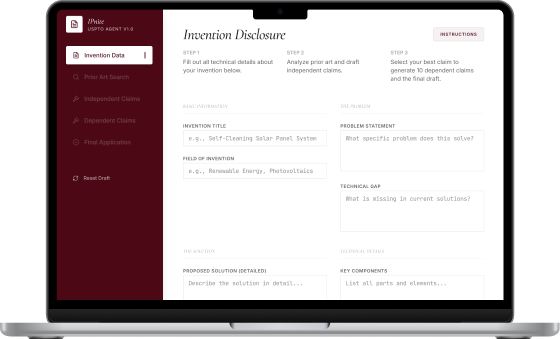
Explore a Search Strategy Preview or Draft Preview with your own invention. The 7-day free trial does not include a complete search or a final refined, exportable application. No credit card and no automatic charges.
Try IPnite free