
IPNITE PATENT GUIDE
How to Patent an Idea
You cannot patent an abstract idea, but you can patent the concrete technical solution behind it. Here is the path from idea to a filed application.
 IPnite
1. Turn the idea into an invention
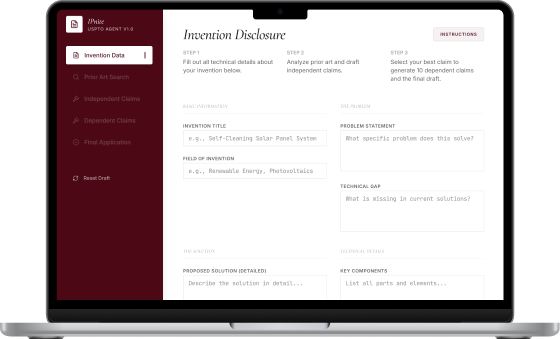
Patent offices protect inventions: technical solutions to technical problems that can be made or used. "An app that helps farmers" is an idea; a specific method of processing soil-sensor data to schedule irrigation is an invention. Write down the problem, how your solution works, its essential components, and the alternatives you can imagine.
Keep the invention confidential while you prepare. In most countries a public disclosure before filing can destroy novelty, and grace periods are limited and not universal.
2. Search the prior art
Before investing in drafting, look for patents, applications, papers, and products that already disclose something similar. The goal is not to prove that nothing exists, but to find the closest references and understand what is truly new about your solution.
3. Check patentability
Most systems require novelty, inventive step (non-obviousness in the United States), and industrial application or utility. Some subject matter, such as abstract methods, discoveries, or certain medical methods, is excluded or restricted depending on the country.
4. Choose where and how to file
Decide which markets matter. In the United States and, since April 2026, in Mexico, a provisional application can secure an early date for 12 months. In Argentina and Brazil you file the complete national application directly. Within 12 months of your first filing you can extend protection abroad using Paris Convention priority or a single PCT application.
5. Draft the application
A patent application has a description detailed enough for a skilled person to reproduce the invention, claims that define the protection, an abstract, and usually drawings. The claims are the most important part: they decide what others cannot do without your permission.
- Describe several embodiments and variants, not just one prototype
- Draft independent claims for the core combination and dependent claims as fallbacks
- Use consistent terminology and reference numerals
- Review everything before filing or have it professionally reviewed
6. File, then manage the process
After filing, the office examines formalities and substance, may issue objections, and eventually grants or refuses the patent. Track deadlines, answer office actions, and pay maintenance or annuity fees to keep the patent alive.
Frequently asked questions
Can I patent an idea without a prototype?
Yes, if you can describe the invention in enough detail for a skilled person to make and use it. A physical prototype is not required, but a vague concept is not enough.
How long does it take to get a patent?
It depends on the office and the field; examination commonly takes several years. Filing, however, secures your date immediately.
Get your application ready to file
Explore a Search Strategy Preview or Draft Preview with your own invention. The 7-day free trial does not include a complete search or a final refined, exportable application. No credit card and no automatic charges.
Try IPnite free